
WELCOME BONUS 300%
UP TO €2000 + 100
FREE SPINS
UP TO €2000 + 100
FREE SPINS
Home → Roulette
Roulette at Martin Casino
Dozen 2:1 and Columns Overview
The Dozen bet pays 2:1 on European, American, and French Roulette variants, covering twelve numbers per spin. This payout structure remains constant across all three wheel types, regardless of the differing house edges or sector counts. Players receive double their stake when one of the selected dozen sectors hits during the game round.
Column bets also offer a 2:1 return for players who correctly predict which vertical column of twelve numbers wins. Both Dozen and Column wagers share identical odds and payouts in standard European, American, and French roulette games. These external bets provide consistent returns despite variations in the specific table rules or zero configurations used by the casino.
French Roulette with La Partage applies this same 2:1 payout to even-money bets but refunds half the stake on zero. Inner bets like Straight or Split do not benefit from La Partage, retaining their standard 35:1 or 17:1 multipliers. The Dozen and Column bets remain unaffected by the zero rule, maintaining their fixed 2:1 payout ratio throughout the session.
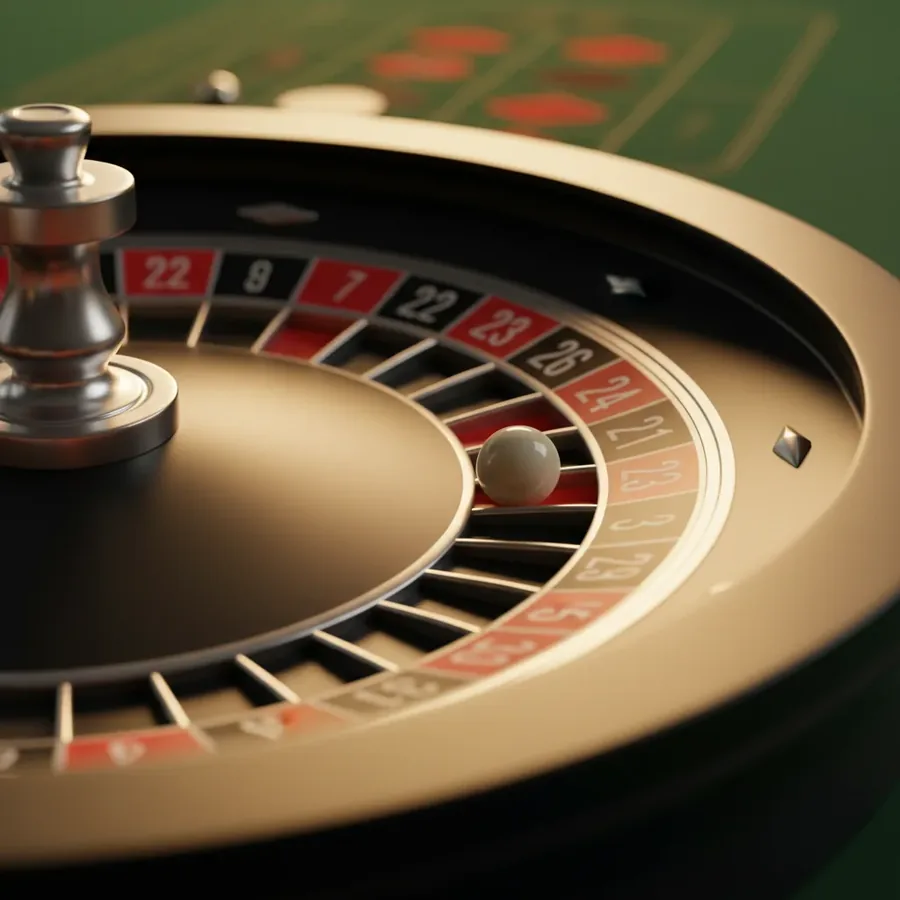
2.70 vs 5.26 Percent House Edge
European Roulette features a single zero on its thirty-seven sectors, resulting in a precise house edge of 2.70 percent. This advantage is applied uniformly to all bet types, including Straight bets paying 35:1 and Dozen bets paying 2:1. The consistent edge ensures that the theoretical return to player percentage remains stable at 97.30 percent across every wager placed.
American Roulette introduces a double zero, expanding the wheel to thirty-eight sectors and doubling the house advantage to 5.26 percent. This higher edge significantly reduces the RTP to 94.74 percent compared to the European variant, impacting long-term profitability. The additional zero increases the casino's mathematical advantage on all standard bets, from simple color wagers to complex corner combinations.
The Five Number Bet in American Roulette carries an exceptional house edge of 7.89 percent, making it the worst value on the wheel. This unique wager covers zero, double zero, and the first three numbers, paying only 6:1 instead of the standard 7:1. No equivalent high-edge bet exists in European or French Roulette, where the maximum house advantage remains capped at 2.70 percent for inner bets.
How Long for 40x Wager with 10 Percent?
The welcome bonus provides up to two thousand euros alongside one hundred free spins, requiring a forty times wagering requirement on the bonus amount. Table games contribute only ten percent toward fulfilling this turnover target, meaning players must wager ten times more than with slots to clear the funds. This low contribution rate significantly extends the time needed to unlock withdrawable cash from the initial promotional credit.
For a maximum bonus of two thousand euros, the total required turnover equals eighty thousand euros due to the forty times multiplier. Since table games count only ten percent, players must place eight hundred thousand euros worth of bets to satisfy the condition completely. This calculation demonstrates how the reduced contribution percentage drastically inflates the actual betting volume required to convert bonus funds into real money.
Roulette variants like Quantum Roulette Live and Mega Roulette fall under this ten percent contribution rule, slowing down the clearing process considerably. Each spin on these live tables adds minimal progress toward the eighty thousand euro target, demanding substantial bankroll management from the participant. The strict contribution limit makes high-stakes table play inefficient for meeting wagering requirements efficiently within a reasonable timeframe.
What Doesn't Count as Loss Protection with Zéro?
La Partage rules in French Roulette refund half the stake on even-money bets like Red/Black when the ball lands on zero. This protection applies exclusively to outside bets with 1:1 payouts, effectively halving the house edge for those specific wagers to 1.35 percent. Players relying on this rule must ensure they are playing the correct variant, as standard European tables do not offer this partial refund mechanism.
Inner bets such as Straight, Split, Street, Corner, and Six Line do not qualify for La Partage protection in any French Roulette variant. If zero appears, players lose their entire stake on these numbers, which pay 35:1, 17:1, 11:1, 8:1, or 5:1 respectively. The absence of loss protection for inner bets means these wagers carry the full 2.70 percent house edge regardless of the zero outcome.
Mega Roulette and PowerUP Roulette lack La Partage rules entirely, offering no stake refund when zero hits on any bet type. Even if a player places a straight bet on a number that loses to zero, the full stake is forfeited without exception. This distinction highlights why understanding the specific table rules is crucial before placing wagers, as protection mechanisms vary significantly between different live dealer game providers.
Quantum Roulette: Which Numbers Get Multipliers
Quantum Roulette by Playtech randomly assigns multipliers up to five hundred times to one to five specific numbers on the thirty-seven sector wheel. These quantum boosts apply only to direct number bets, potentially turning a standard 35:1 payout into a massive win if the boosted number hits. The base RTP remains 97.30 percent, but the multipliers create sporadic opportunities for significantly higher returns on individual spins.
Mega Roulette by Pragmatic Play Live allows up to five mega numbers to receive multipliers ranging from fifty to five hundred times. Direct bets on these mega numbers pay 29:1 plus the multiplier value, offering substantial potential gains compared to standard straight bets. This mechanic differs from Quantum Roulette by altering the base payout structure for winning mega numbers while maintaining the standard thirty-seven sector layout.
PowerUP Roulette by Pragmatic Play Live features three to five power-up numbers with maximum wins reaching fifteen thousand five hundred times the stake. These multipliers enhance the excitement of direct bets without changing the underlying house edge of 97.19 percent RTP. Players targeting these high-multiplier outcomes should note that only straight bets benefit from the power-up mechanics, excluding split or corner wagers from the boost.
Roulette bet types at a glance
| Bet | Payout | Win Chance | Numbers Covered | House Edge |
|---|---|---|---|---|
| Roulette Amerikanisch (doppelte Null, 38 Sektoren) | Straight 35:1, Split 17:1, Street 11:1, Corner 8:1, Six Line 5:1, Dozen 2:1, Column 2:1, Rot/Schwarz 1:1 | 94.74% | 38 Sektoren (1–36 + 0 + 00); Auszahlungen wie beim europäischen Rad, aber der zusätzliche Sektor verdoppelt den Hausvorteil | 5.26% |
| Roulette Amerikanisch – Five Number Bet (0, 00, 1, 2, 3) | Five Number 6:1 (deckt 5 von 38 Sektoren) | 92.11% | Einzige Wette am amerikanischen Rad mit Edge über 5,26% – „Fallenwette“. Kein Äquivalent am europäischen Rad | 7.89% |
| Roulette Europäisch (einfache Null, 37 Sektoren) | Straight 35:1, Split 17:1, Street 11:1, Corner 8:1, Six Line 5:1, Dozen 2:1, Column 2:1, Rot/Schwarz 1:1, Odd/Even 1:1, 1-18/19-36 1:1 | 97.30% | 37 Sektoren (1–36 + 0); Auszahlungen wie für 36 Sektoren – daher konstanter Edge auf ALLE Wetten | 2.70% |
| Roulette Französisch mit La Partage (gerade Chancen) | Rot/Schwarz 1:1 (bei 0 Rückerstattung 50%), Odd/Even 1:1, Low/High 1:1; Innere Einsätze ohne La Partage: Straight 35:1, Split 17:1, Street 11:1, Corner 8:1 | 98.65% | Bei 0 wird die Hälfte des Einsatzes auf gerade Chancen zurückerstattet (Rot/Schwarz, Pair/Impair, Manque/Passe). En Prison gibt denselben 1,35%. Regel gilt NUR für gleiche Einsätze | 1.35% |
| Roulette Französisch, innere Einsätze (La Partage gilt nicht) | Straight 35:1, Split 17:1, Street 11:1, Corner 8:1, Six Line 5:1, Dozen 2:1, Column 2:1 | 97.30% | Rad gleich (37 Sektoren), aber La Partage/En Prison gilt nicht für innere Einsätze – Edge bleibt europäisch | 2.70% |
Which Bets Count Towards 10 Percent?
Table games contribute exactly 10 percent toward the wagering requirement for the 300% welcome bonus up to €2,000 plus 100 free spins. This contribution rate is significantly lower than slot contributions, which typically account for 100 percent of turnover.
The specific contribution percentage applies uniformly across all table game variants available on the platform, including both standard and live dealer formats. Players must ensure that every wager placed on these tables is tracked correctly to meet the full bonus conditions without delay.
This limited contribution means that players need to wager ten times more money on table games compared to slots to clear the same bonus amount. For instance, a €100 bet only adds €10 to the required turnover total, extending the time needed to unlock withdrawal eligibility.
House Edge: What 2.70 Percent Actually Costs
European Roulette features a house edge of 2.70 percent, derived from its single zero on a wheel with 37 sectors. This mathematical advantage ensures that the casino retains a small portion of all wagers over the long term.
In contrast, American Roulette carries a much higher house edge of 5.26 percent due to the additional double zero sector. This nearly doubles the cost of play compared to the European variant, making it a less favorable option for budget-conscious players.
A player betting €100 per hour on European Roulette can expect to lose approximately €2.70 on average, whereas the same stake on American Roulette results in an expected loss of €5.26. This difference highlights the importance of choosing the correct wheel variant to minimize financial drain.
Error: 10 Percent Contribution to Wagering Missed
Many players mistakenly assume that table games contribute fully to the wagering requirement, similar to how slots are treated. In reality, the 10 percent contribution rate for table games significantly slows down the bonus clearance process.
For example, if a player wagers €1,000 on table games, only €100 counts toward the turnover target, rather than the full €1,000. This discrepancy often leads to confusion when players fail to meet the requirements within the expected timeframe.
Understanding this limitation is crucial for managing expectations, as it requires substantially higher volumes of play to clear bonuses using table games. Players should adjust their strategies accordingly to avoid frustration and ensure they meet the terms effectively.
La Partage Applies Only to Even Chances
La Partage is a rule that returns half of the wager on even chance bets when the ball lands on zero. This benefit is exclusive to outside bets such as Red/Black, Odd/Even, and High/Low, significantly reducing the house edge for these specific wagers.
Inside bets like Straight, Split, or Corner do not qualify for La Partage, meaning the full stake is lost if zero appears. Consequently, the house edge remains at 2.70 percent for these internal wagers, unlike the reduced 1.35 percent for even chances.
Players utilizing La Partage can enjoy a lower effective house edge of 1.35 percent on eligible bets, compared to the standard 2.70 percent. This distinction makes even chance bets more attractive for risk-averse players seeking to extend their gameplay duration.
Step-by-Step to Your First Straight Bet
To place a Straight bet in European Roulette, select a single number from 0 to 36 on the betting layout. This wager offers the highest payout potential but comes with the lowest probability of winning among all roulette bets.
If the ball lands on the chosen number, the payout is 35 to 1, meaning a €10 bet returns €350 in winnings. However, if any other number wins, the entire stake is lost, highlighting the high-risk nature of this strategy.
Players should note that Straight bets do not benefit from La Partage, so landing on zero results in a total loss of the wager. This contrasts with even chance bets, where half the stake might be returned under favorable conditions.
Which Bets are Excluded from Bonus Wager?
Table games contribute only 10 percent toward the turnover requirement for the 300% welcome bonus up to 2,000 euros plus 100 free spins. This low contribution rate means that every euro wagered on a roulette table counts as just ten cents of progress. Players must therefore bet significantly more volume than slot players to clear the same amount of bonus funds.
Roulette variants such as French Roulette with La Partage or American Roulette fall under this restricted category. While slots typically offer higher contribution percentages, table games impose a strict penalty on the player's ability to convert bonus money into withdrawable cash. The house edge remains standard, but the path to unlocking the full 2,000 euro potential is much steeper.
A player betting 100 euros on a European wheel with a 2.70% house edge generates only 10 euros of required turnover. To meet a hypothetical 40x wagering requirement on a 600 euro bonus, the player would need to generate 24,000 euros in total bets at tables. This volume exposes the bankroll to significant statistical loss before any withdrawal is permitted.
Table Limit 500 Euro Stops Every Doubling
The maximum bet limit of 500 euros on live tables like Quantum Roulette or Mega Roulette effectively blocks Martingale strategies. A player starting at 10 euros and doubling after each loss hits the ceiling after six consecutive losses, as the next required bet of 640 euros exceeds the cap. This structural constraint prevents recovery of previous losses through simple progression systems.
Quantum Roulette by Playtech allows stakes between 0.10 and 5,000 euros, while Mega Roulette limits bets to 2,000 euros. However, specific table rules often impose lower maximums for certain bet types or during high-multiplier rounds. The 500 euro threshold specifically targets high-risk doubling sequences, ensuring the casino retains its mathematical advantage over extended losing streaks.
Even if a player reaches the 5,000 euro limit on PowerUP Roulette, the max win is capped at 15,525 times the stake. This cap limits the upside potential compared to unlimited high-roller tables elsewhere. The combination of a 500 euro soft limit on many tables and hard win caps restricts aggressive capital deployment.
Split 17:1 and Street 11:1 Explained
A Split bet covering two adjacent numbers pays 17 to 1, offering a probability of approximately 5.41% on a European wheel. This payout ratio contrasts with the Straight bet, which covers a single number and pays 35 to 1 but has only half the hit frequency. The Split provides a middle ground between risk and reward for players seeking more frequent small wins.
A Street bet spans three numbers in a horizontal row and pays 11 to 1, with a winning probability of roughly 8.11%. Compared to Corner bets which cover four numbers and pay 8 to 1, the Street offers a slightly better return per unit risk despite covering fewer squares. Both bets share the same 2.70% house edge on a European wheel without special rules.
In French Roulette with La Partage, these internal bets do not benefit from the half-refund rule available on even-money outside bets. The house edge remains fixed at 2.70% regardless of the outcome, unlike Red/Black where it drops to 1.35% on zero. Players using these bets must accept the standard European disadvantage without any protective mechanisms.
Which Table Fits a 30 Euro Balance
European Roulette offers the best balance for a 30 euro bankroll due to its 2.70% house edge and 0.10 euro minimum bets. With 300 possible spins at the lowest stake, the player has ample opportunity to survive variance while chasing the 97.30% RTP. This duration far exceeds what is possible on higher-edge variants or larger minimum tables.
American Roulette requires careful management because its 5.26% house edge drains the bankroll twice as fast as the European version. Even at a 0.10 euro minimum, the statistical loss per hour is significantly higher, reducing the effective playing time for the same 30 euro deposit. The double zero pocket creates an immediate disadvantage that small balances cannot overcome.
Live dealer tables like Quantum Roulette start at 0.10 euros but may have higher minimums for optimal multipliers. A 30 euro balance allows for limited participation in high-volatility rounds where multipliers reach 500x. However, the volatility demands precise bankroll management to avoid rapid depletion before hitting a significant multiplier event.
La Partage: What 50 Percent Return Means
La Partage returns 50 percent of the stake on even-money bets when the ball lands on zero in French Roulette. This rule effectively halves the house edge from 2.70% down to 1.35% for Red/Black, Odd/Even, and High/Low wagers. The mechanism acts as a partial refund rather than a push, preserving part of the player's capital during unlucky zero outcomes.
En Prison offers an alternative mechanic where the stake is imprisoned for the next spin instead of being immediately halved. Both rules yield the same 1.35% house edge for even-money bets, but La Partage provides faster capital recovery. The immediate return reduces variance compared to waiting for a second spin to resolve the imprisoned bet.
This benefit applies exclusively to outside even-money bets and does not extend to inside bets like Splits or Streets. Inside bets retain the standard 2.70% house edge regardless of the zero outcome, resulting in a 35 to 1 or 17 to 1 payout. Players combining inside and outside bets must calculate the blended house edge based on their allocation.
Contact
Live - online chat
Banking






Providers








Martin Casino 2026